Mankato,
MN – Region Nine Development Commission (RNDC) selected by the German-American
Chamber of Commerce of the Midwest to participate in the Transatlantic Cluster
Initiative-Food Processing program supported by the German government.
Germany is
the leading player for food processing excellence in the European Union and has
a high concentration of food processors.
The Transatlantic Cluster Initiative-Food Processing program connects
German and American cluster organizations through targeted events in the United
States and Germany. This program establishes best practices with focuses on
cluster management, internationalization, skilled workforce recruitment,
technological development, digitalization in food processing, resource
efficiency, and opportunities for foreign direct investment (FDI) and internal
collaboration that could further shape Minnesota’s food processing cluster.
The Food
Processing program in Germany will be sending 15 select United States
participants to Germany to visit key
stakeholders in food processing from business and research associations as well
as the opportunity to interact with leading industry associations and clusters.
The program will take place from May 12, 2019 to May 17, 2019.
“It is an
honor to be invited by the State of Minnesota to apply and to be selected by
the German-American Chamber of Commerce of the Midwest to participate in the
Transatlantic Cluster Initiative program.
Region Nine is a large and thriving food producing region which we are
excited to promote to the German market. Promoting regional assets and
championing the nine counties are at the core of RNDC’s mission, and we believe that opening doors to
the foreign markets can only strengthen the local economy.
Region Nine
represents strong clusters that encompass robust manufacturing, food
production, and innovation throughout sectors that intersect a variety of technological
innovation and commodity production. As
highlighted in our recent work on the federal initiative, Investing in Manufacturing Communities Partnership (IMCP), these
diverse yet interrelated clusters represent the highest percentage of jobs within
Region Nine and also encompass the highest earnings by industry in eight of the
nine counties.
Food
production, agribusiness, and manufacturing are closely aligned in Germany’s
industrial networks, similar to Region Nine, so beyond laying the groundwork
for closer trades we also hope to exchange ideas that will benefit the
nine-county region as well as our German counterparts,” shared Executive
Director, Nicole Griensewic Mickelson.
“RNDC’s
invitation to participate in this exchange serves as recognition of the
importance of regional government,” shared Chair of RNDC’s Commission, Steve
Rohlfing. “Our nine counties are tied together as an important economic unity
in South Central Minnesota, and RNDC’s board is quite pleased that the
organization’s work is recognized by the State of Minnesota and their
international partners.”
###
Region Nine Development Commission takes great pride in working with
and on behalf of counties, cities, townships, and schools throughout South Central
Minnesota. Since 1972, being a partner for progress has led to the development
of programs and identification of solutions in the areas of community
development, economic development, transportation, healthy communities,
business development, and leveraging regional resources.

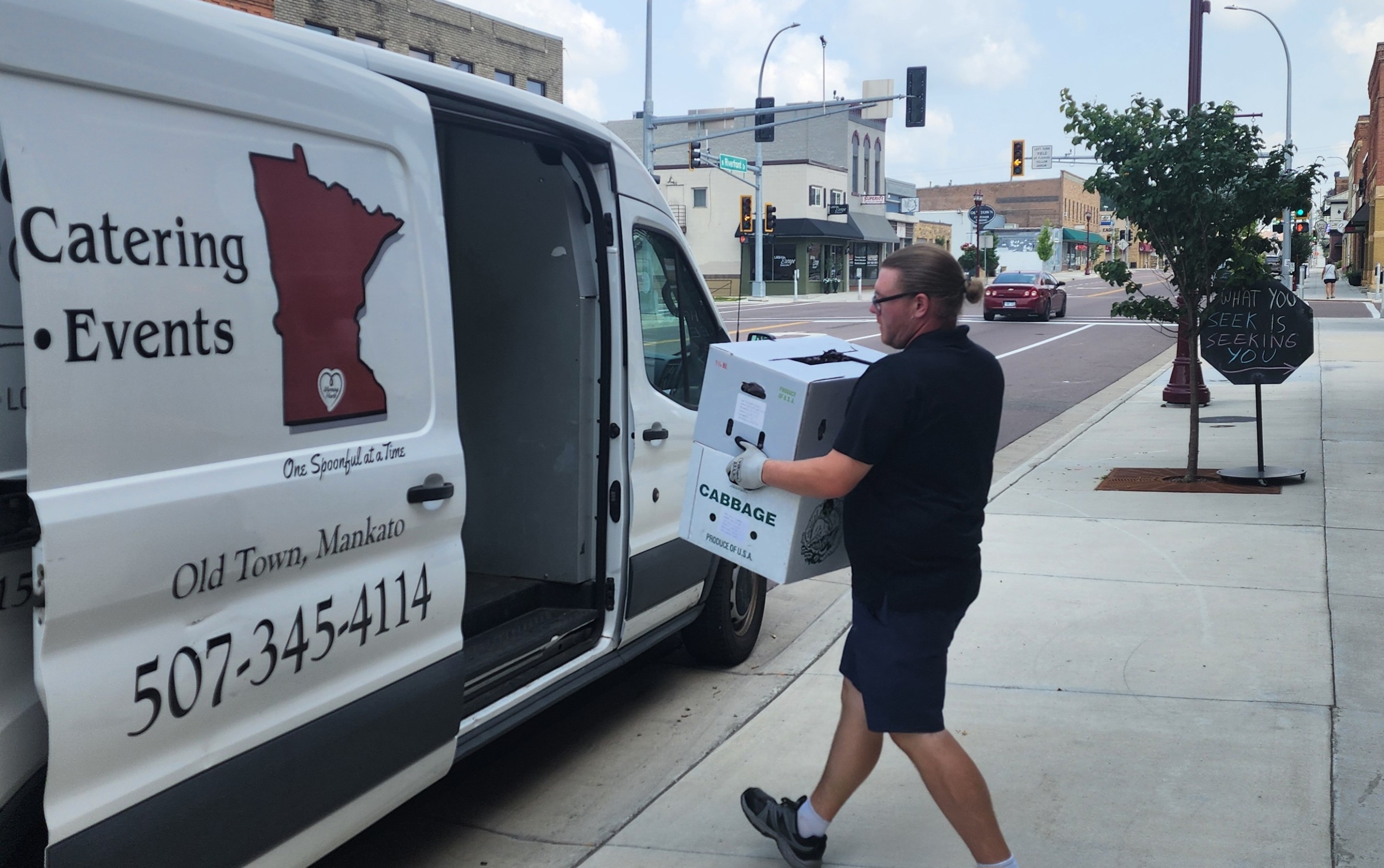 KEYC: Region Nine Food Rescue Coordinator Finds New Home for Unwanted FoodAugust 4, 2026 - 8:58 am
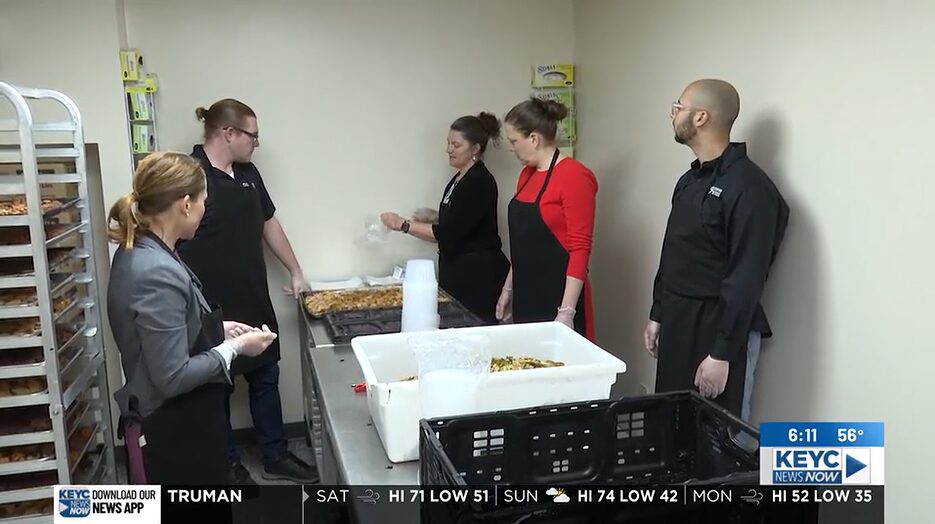 Mankato Free Press: Food rescue coordinator attacks regional food insecurityFebruary 24, 2026 - 8:12 am
April E-Newsletter
in News, Newsletter/by Region NineRead about upcoming events, funding opportunities, and more in the latest issue of Region Nine’s E-News!
Read Now
Mankato, Blue Earth receive Safe Routes to Schools grants
in News/by Region NineSafe Routes to Schools grants announced this week will help the city of Blue Earth add trails and improve pedestrian routes, and will help update a plan for pedestrian improvements near Mankato schools.
The Minnesota Department of Transportation is granting $2.3 million to 29 cities and school districts to support infrastructure and programs that encourage more students to walk and bike to school and to make their routes safe.
Mankato Area Public Schools is among 18 recipients of planning grants. The district received $25,000 to partner with the Region Nine Development Commission to update and expand its Safe Routes to Schools plan.
The plan was drafted in 2013 and included desired improvements around six of the district’s elementary schools, said Shawn Schloesser, Region Nine community and business development specialist.
Continue reading The Free Press article.
The Free Press Names and Notables- Region Nine Development Commission
in News/by Region NineRegion Nine Development Commission’s Executive Director, Nicole Griensewic Mickelson was selected to participate in the 11TH Americas Competitiveness Exchange on Innovation and Entrepreneurship as a newly selected ACE Ambassador.
Ambassadors are chosen based on their proven leadership and commitment to open doors in their community.
ACE is designed to connect decision makers from the Americas and beyond to establish international and regional partnerships, increase trade and investment, and strengthen Hemispheric innovation and competitiveness by building on ideas and models that work to create jobs.
The program has resulted in more than 2,000 collaboration opportunities, strategic alliances, and new projects.
ACE is organized and supported by the U.S. Department of Commerce’s International Trade Administration and Economic Development Administration, U.S. Department of State, and the Organization of American States.
The 11th ACE will take place in Puerto Rico May 18-25.
ACE 11 will showcase examples of effective innovation and entrepreneurship-related initiatives underway in Puerto Rico that are impacting its economic development and recovery with the goal of creating information sharing and collaboration building opportunities for all participants. The program will take participants to 10 cities of all sizes throughout the island, where they will interact with over 30 key innovation-driven businesses and institutions as well as share emerging technologies and best practices linked to the sharing economy, renewable energy, medical tourism, smart cities, and the internet of things.
Region Nine Development Commission Selected to Participate in the Transatlantic Cluster Initiative-Food Processing Program in Germany
in News/by Region NineMankato, MN – Region Nine Development Commission (RNDC) selected by the German-American Chamber of Commerce of the Midwest to participate in the Transatlantic Cluster Initiative-Food Processing program supported by the German government.
Germany is the leading player for food processing excellence in the European Union and has a high concentration of food processors. The Transatlantic Cluster Initiative-Food Processing program connects German and American cluster organizations through targeted events in the United States and Germany. This program establishes best practices with focuses on cluster management, internationalization, skilled workforce recruitment, technological development, digitalization in food processing, resource efficiency, and opportunities for foreign direct investment (FDI) and internal collaboration that could further shape Minnesota’s food processing cluster.
The Food Processing program in Germany will be sending 15 select United States participants to Germany to visit key stakeholders in food processing from business and research associations as well as the opportunity to interact with leading industry associations and clusters. The program will take place from May 12, 2019 to May 17, 2019.
“It is an honor to be invited by the State of Minnesota to apply and to be selected by the German-American Chamber of Commerce of the Midwest to participate in the Transatlantic Cluster Initiative program. Region Nine is a large and thriving food producing region which we are excited to promote to the German market. Promoting regional assets and championing the nine counties are at the core of RNDC’s mission, and we believe that opening doors to the foreign markets can only strengthen the local economy.
Region Nine represents strong clusters that encompass robust manufacturing, food production, and innovation throughout sectors that intersect a variety of technological innovation and commodity production. As highlighted in our recent work on the federal initiative, Investing in Manufacturing Communities Partnership (IMCP), these diverse yet interrelated clusters represent the highest percentage of jobs within Region Nine and also encompass the highest earnings by industry in eight of the nine counties.
Food production, agribusiness, and manufacturing are closely aligned in Germany’s industrial networks, similar to Region Nine, so beyond laying the groundwork for closer trades we also hope to exchange ideas that will benefit the nine-county region as well as our German counterparts,” shared Executive Director, Nicole Griensewic Mickelson.
“RNDC’s invitation to participate in this exchange serves as recognition of the importance of regional government,” shared Chair of RNDC’s Commission, Steve Rohlfing. “Our nine counties are tied together as an important economic unity in South Central Minnesota, and RNDC’s board is quite pleased that the organization’s work is recognized by the State of Minnesota and their international partners.”
###
Region Nine Development Commission takes great pride in working with and on behalf of counties, cities, townships, and schools throughout South Central Minnesota. Since 1972, being a partner for progress has led to the development of programs and identification of solutions in the areas of community development, economic development, transportation, healthy communities, business development, and leveraging regional resources.
Region Nine Development Commission Executive Director to attend Eleventh Americas Competitiveness Exchange
in News/by Region NineMankato, MN – Region Nine Development Commission’s (RNDC) Executive Director, Nicole Griensewic Mickelson, was selected to participate in the eleventh Americas Competitiveness Exchange on Innovation and Entrepreneurship (ACE) as a newly selected ACE Ambassador.
ACE is designed to connect decision makers from the Americas and beyond to establish international and regional partnerships, increase trade and investment, and strengthen Hemispheric innovation and competitiveness by building on ideas and models that work to create jobs. More than 10,000 authorities/officials and experts have engaged in the program since its inception in 2014, including 400+ global selected participants that have joined the 10 ACE Editions. The program has resulted in more than 2,000 collaboration opportunities, strategic alliances, and new projects.
ACE is organized and supported by the U.S. Department of Commerce’s International Trade Administration and Economic Development Administration, U.S. Department of State, and the Organization of American States. The 11th ACE (ACE 11) will take place in Puerto Rico from May 18, 2019 to May 25, 2019. ACE 11 will showcase examples of effective innovation and entrepreneurship-related initiatives underway in Puerto Rico that are impacting its economic development and recovery with the goal of creating information sharing and collaboration building opportunities for all participants. The program will take participants to 10 cities of all sizes throughout the island, where they will interact with over 30 key innovation-driven businesses and institutions as well as share emerging technologies and best practices linked to the sharing economy, renewable energy, medical tourism, smart cities, and the internet of things.
ACE Ambassadors are chosen based on their proven leadership and commitment to open doors in their community. ACE Ambassadors maintain and enhance best practices that promote competitiveness in the Americas, provide support in guiding communities on current and future ACE programs, represent the ACE program domestically and internationally, provide expertise to participants and alumni, and much more.
“I am excited to represent the region at ACE 11 in this new role as an ACE Ambassador as we continue to collaborate and explore new regional and global partnerships. ACE 10 was an opportunity to connect with the Puerto Rican Department of Economic Development and Commerce.Their senior leadership was interested in the work we were completing at the time on regional Medical Device Manufacturing (MDM), as Puerto Rico is a major hub for the global MDM industry with close ties to the firms operating in Minnesota. We shared our final plan, MedTech Connect, with the Secretary and Deputy Secretary this past fall, and we are eager to continue conversations regarding possible partnerships in hopes of strengthening the industry clusters here at home and in Puerto Rico. Despite the geographic distance, close connections already exist following the devastating hurricanes in Puerto Rico as local firms took over some manufacturing contracts while the island rebuilt. It is our hope that RNDC can help strengthen these ties and possibly expand to related industries. It is therefore very fortunate that ACE 11 will take place in Puerto Rico this May. As regional leaders, it is important for RNDC to continue our work and open doors to new regional and global markets that can only further strengthen our communities,” shared Executive Director, Nicole Griensewic Mickelson.
###
Region Nine Development Commission takes great pride in working with and on behalf of counties, cities, townships, and schools throughout South Central Minnesota. Since 1972, being a partner for progress has led to the development of programs and identification of solutions in the areas of community development, economic development, transportation, healthy communities, business development, and leveraging regional resources.
St. Peter American Legion Decides To Sell Whisky River
in News/by Region NineAfter St. Peter American Legion received the gift of Whisky River last fall, Legion Members had plenty of different opinions on how the organization could use the old restaurant.
Ultimately, they brought in Region 9 Development Commission to conduct a feasibility study.
“So the feasibility study was really looking at could they get an unbiased decision as to what are some options to help guide the committee and membership through,” explained Nicole Griensewic Mickelson of Region 9.
The in–depth study contained interviews with many in the community about the Legion as well as a wide range of data.
“Being able to gather that qualitative and quantitative data as well as looking at different traffic patterns, commuter labor sheds and as well as looking at the industry, industry trends with restaurants,” added Griensewic Mickelson. “So looking at what is the density for how many bars and restaurants in a certain geography and being able to provide them with that data.”
Article from KEYC.
American Legion Post 37 members decide to sell former Whiskey River
in News/by Region NineRead the St. Peter Herald article.
St. Peter American Legion votes to sell Whiskey River
in News/by Region NineST. PETER — The former Whiskey River restaurant is back on the market.
Members of St. Peter’s American Legion decided not to move into the larger building on Highway 99.
“It’s far too big for our use and would be far too expensive for us to run,” said Legion member Shawn Schloesser.
Nicollet County Bank donated the former restaurant and bar to the William R. Whitty American Legion Post 37 late last year.
Legion leaders hired the Region Nine Development Commission to study whether the veterans service organization should move from its home on West Nassau Street. The study concluded the more than 9,000-square-foot former restaurant would be too costly for the Legion to update and operate.
Legion members met Monday night and made a nearly unanimous decision to sell the property and use the proceeds to modernize its existing building and programs.
Schloesser, chairman of the committee formed to lead the Whiskey River decision, and Post Cmdr. Dave Arpin said they will now turn their efforts toward making the post “more welcoming” to all community members.
Legion leadership said the Whiskey River gift was a blessing, but it also created dissonance among post membership over how to move forward.
Schloesser said he was relieved when the feasibility study yielded a firm recommendation that the Legion should not try to reopen the restaurant — at least not by itself.
“Although the former restaurant and bar could lend itself to be an attractive space, the downsides come with potentially debilitating potentials,” the study warned.
Continue reading the Free Press article.
March E-Newsletter
in News, Newsletter/by Region NineRead about upcoming events, funding opportunities, and more in the latest issue of Region Nine’s E-News!
Read Now
February E-Newsletter
in News, Newsletter/by Region NineRead about upcoming events, funding opportunities, and more in the latest issue of Region Nine’s E-News!
Read Now